ALF Licensing & Regulations: Startup & Business Tips for Assisted Living Owners
Opening and running an assisted living facility is not just about caring for residents—it is also about staying compliant, protecting your license, and building a profitable business. Many facilities fail not because of poor care, but because they misunderstand licensing rules and regulatory requirements.
This guide breaks down what every assisted living entrepreneur needs to know about licensing and regulations—and how to turn compliance into a business advantage.
Why ALF Licensing Is the Foundation of Your Business
Your assisted living license is your legal permission to operate. Without it, you cannot admit residents, accept payments, or market your facility.
Licensing rules exist to ensure:
-
Resident safety
-
Quality of care
-
Proper staffing
-
Safe buildings
-
Ethical business practices
When your facility follows regulations correctly, you build trust with families, referral sources, and state inspectors.
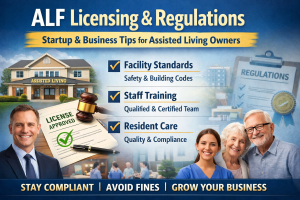
The Three Main Areas Every ALF Must Comply With
Even though regulations differ by state, every assisted living facility is regulated in three major areas:
1. Facility & Building Standards
Your building must meet safety and health requirements before you can open and during every inspection. This includes:
-
Fire safety systems
-
Emergency exits
-
Bedroom size and layout
-
Bathrooms and accessibility
-
Kitchen and food service areas
-
Clean water and sanitation
If your building does not meet code, your license can be delayed, denied, or restricted.
2. Staffing & Training Requirements
Your facility is only as strong as the people who run it.
Most states require:
-
A licensed administrator
-
Background screening
-
Core training and ongoing education
-
CPR and first aid
-
Caregiver training
Hiring untrained staff or missing training deadlines is one of the fastest ways to get fined or cited.
3. Resident Care & Rights
Assisted living is regulated to protect residents. This includes:
-
Admission criteria
-
Care plans
-
Medication assistance
-
Documentation
-
Resident rights and privacy
-
Abuse and neglect prevention
Failure to follow care regulations puts your residents at risk and puts your license in danger.
Why Many ALF Startups Fail
Many new owners make these mistakes:
-
They lease or buy a building before knowing zoning and licensing rules
-
They hire staff before understanding training requirements
-
They open without clear policies and procedures
-
They rely on verbal advice instead of official regulations
This leads to delays, denied licenses, and unexpected expenses.
How to Start the Right Way
Successful assisted living businesses follow a clear roadmap:
Step 1: Learn the Regulations First
Before signing any lease or hiring staff, study:
-
Assisted living rules
-
Health department requirements
-
Fire marshal regulations
-
Local zoning laws
This prevents expensive mistakes.
Step 2: Choose the Right License Type
Many states offer different ALF license categories such as:
-
Standard care
-
Limited nursing
-
Extended congregate care
-
Memory care
Your license type affects how much you can charge and what services you can provide.
Step 3: Prepare for Inspections
Before your state inspection:
-
Train your staff
-
Prepare policies and records
-
Set up medication systems
-
Complete fire and health approvals
A well-prepared inspection saves months of delays.
Compliance Is a Business Advantage
Many owners see regulations as a burden. Smart owners see them as a competitive advantage.
When your facility is compliant:
-
You avoid fines and shutdowns
-
You pass inspections smoothly
-
You attract referral agencies
-
You gain family trust
-
You increase occupancy
A clean inspection history becomes part of your brand.
Turn Your ALF Into a Professional Business
Assisted living is not a side business. It is a regulated healthcare business.
Owners who succeed treat their ALF like a real company:
-
Strong systems
-
Trained staff
-
Proper documentation
-
Ongoing compliance
This is how small homes grow into stable, profitable operations.
Final Thoughts
Licensing and regulations are not just red tape—they are the backbone of a successful assisted living facility. When you understand and respect the rules, your facility runs smoother, your residents are safer, and your business grows faster.