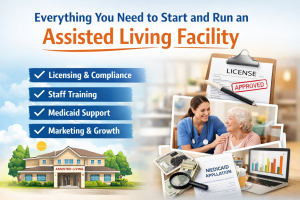
Everything You Need to Start and Run an Assisted Living Facility
Starting and running an assisted living facility is more than opening doors and filling rooms. It’s about compliance, care, confidence, and creating a safe, supportive environment where residents can truly feel at home.
Whether you’re a first-time owner, an entrepreneur entering senior care, or an existing operator looking to improve operations, understanding the full picture is key. This guide walks you through everything you need to successfully start and run an assisted living facility—without feeling overwhelmed.
1. Understanding Assisted Living Requirements
Before anything else, it’s important to understand that assisted living is highly regulated. Each state has its own rules related to licensing, staffing, resident care, documentation, and inspections.
Key areas you must understand early:
-
State licensing requirements
-
Resident eligibility and care standards
-
Staffing ratios and qualifications
-
Safety, infection control, and emergency preparedness
Missing even one requirement can delay your opening or put your license at risk. That’s why most successful facilities start with expert guidance rather than trial and error.
2. Licensing: The Foundation of Your Facility
Licensing is the backbone of your assisted living operation. This process often includes:
-
Submitting detailed applications
-
Developing policies and procedures
-
Preparing for inspections and surveys
-
Meeting building, fire, and safety standards
Licensing can be time-consuming and confusing without proper direction. A well-prepared application and inspection-ready facility can save months of delays and unnecessary stress.
3. Setting Up Policies, Procedures & Systems
Strong policies aren’t just paperwork—they protect your facility, your staff, and your residents.
Essential systems include:
-
Admission and discharge procedures
-
Medication assistance guidelines
-
Incident reporting and documentation
-
Resident rights and grievance processes
-
Infection control and emergency plans
Clear systems ensure smooth daily operations and help your staff perform confidently and consistently.
4. Staffing & Training: Building a Reliable Team
Your staff is the heart of your assisted living facility. Hiring qualified caregivers is important—but training and ongoing education are what ensure quality care and compliance.
You’ll need:
-
Properly trained administrators and managers
-
Staff education that meets state requirements
-
Ongoing training to reduce errors and turnover
Well-trained teams lead to better resident outcomes, stronger inspections, and a more stable facility overall.
5. Medicaid & Financial Readiness
Many assisted living facilities rely on Medicaid programs to support residents and maintain steady revenue. However, Medicaid enrollment, billing, and compliance can be complex.
Key considerations include:
-
Medicaid waiver enrollment
-
Resident Medicaid applications
-
Documentation and compliance standards
-
Billing and reimbursement processes
When set up correctly, Medicaid can become a powerful tool for both resident access and financial sustainability.
6. Compliance & Inspection Readiness
Compliance doesn’t stop after licensing—it’s an ongoing responsibility. State surveys, inspections, and audits can happen with little notice.
Successful facilities focus on:
-
Ongoing compliance monitoring
-
Mock inspections and internal audits
-
Corrective action planning
-
Staying up to date with regulation changes
Being proactive instead of reactive helps avoid citations, fines, and license risks.
7. Marketing & Occupancy Growth
Even the best facility needs visibility. Marketing is not about “selling”—it’s about building trust with families, referral sources, and the community.
Effective strategies include:
-
Clear online presence and messaging
-
Referral partnerships with hospitals and agencies
-
Community outreach and reputation building
-
Ethical, compliant marketing practices
Consistent marketing helps keep your beds filled and your facility financially healthy.
8. Daily Operations & Long-Term Success
Once your facility is running, long-term success depends on:
-
Strong leadership and systems
-
Regular staff support and training
-
Financial and operational reviews
-
Continuous quality improvement
Facilities that grow successfully are the ones that treat assisted living as both a care mission and a well-managed business.
Why Expert Support Makes the Difference
Starting and running an assisted living facility is achievable—but doing it alone can be costly and overwhelming. Working with experienced consultants helps you:
-
Avoid costly mistakes
-
Save time and resources
-
Stay compliant with confidence
-
Focus on quality care and growth
From licensing and compliance to Medicaid support, training, and marketing, having the right partner can transform your journey.
Ready to Start or Strengthen Your Assisted Living Facility?
Whether you’re just getting started or looking to improve an existing operation, expert guidance can make all the difference. With the right systems, support, and strategy, your assisted living facility can grow into a compliant, compassionate, and successful community.
Take the next step with confidence—because your residents, staff, and future deserve it.