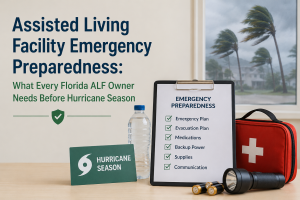
Assisted Living Facility Emergency Preparedness: What Every Florida ALF Owner Needs Before Hurricane Season
Florida’s assisted living facilities face unique challenges during hurricane season and other emergencies. Residents often depend on caregivers for mobility, medication management, and daily living activities, making emergency planning more than a regulatory requirement—it is a responsibility that protects lives.
Whether you are opening a new Assisted Living Facility (ALF) or managing an established community, having a comprehensive emergency preparedness plan can reduce risk, improve response times, and help ensure regulatory compliance.
Why Emergency Preparedness Matters
Emergencies can happen without warning. Hurricanes, flooding, power outages, fires, infectious disease outbreaks, and severe weather events all have the potential to disrupt normal operations.
A well-prepared ALF can:
- Protect residents and staff
- Minimize operational disruptions
- Maintain continuity of care
- Reduce property damage
- Demonstrate compliance during inspections
- Build confidence among residents’ families
Preparation today can prevent costly mistakes tomorrow.
Key Components of an ALF Emergency Plan
Every assisted living facility should develop and regularly update an emergency management plan that addresses:
Risk Assessment
Identify hazards specific to your location, including:
- Hurricanes
- Flooding
- Tornadoes
- Extended power outages
- Fire emergencies
- Infectious disease outbreaks
Understanding potential risks allows your facility to prepare appropriate response procedures.
Resident Evacuation Procedures
Every resident has different medical and mobility needs.
Your evacuation plan should include:
- Transportation arrangements
- Resident tracking procedures
- Medical records accessibility
- Medication transportation
- Staff responsibilities
- Emergency contact information
Conducting practice drills helps ensure everyone understands the process before an actual emergency occurs.
Backup Power Planning
Power outages can quickly become dangerous for vulnerable residents.
Consider:
- Generator capacity
- Fuel availability
- Equipment maintenance schedules
- Refrigeration for medications
- Critical medical equipment support
Regular generator testing helps prevent failures during emergencies.
Medication Management
Residents may require uninterrupted access to medications.
Facilities should maintain procedures for:
- Medication inventory
- Emergency refills
- Secure transportation
- Documentation
- Communication with pharmacies
Preparation reduces the likelihood of treatment interruptions.
Communication Plan
Clear communication keeps everyone informed during an emergency.
Your plan should include communication procedures for:
- Residents
- Families
- Staff members
- Emergency responders
- Healthcare providers
- Local authorities
Maintain updated contact lists and establish multiple communication methods whenever possible.
Staff Training Is Essential
Even the best emergency plan is ineffective if staff members are unfamiliar with their responsibilities.
Training should include:
- Emergency response procedures
- Resident evacuation techniques
- Fire safety
- First aid and CPR
- Communication protocols
- Incident documentation
Regular drills help identify weaknesses and improve team confidence.
Documentation Matters
During inspections or post-emergency reviews, documentation demonstrates preparedness.
Keep records of:
- Emergency drills
- Staff training
- Generator maintenance
- Emergency supply inventories
- Plan updates
- Equipment inspections
Accurate documentation supports compliance and continuous improvement.
Emergency Supply Checklist
Every ALF should maintain emergency supplies that may include:
- Drinking water
- Non-perishable food
- Flashlights
- Extra batteries
- First aid kits
- Personal protective equipment
- Backup communication devices
- Resident hygiene supplies
- Medication storage materials
- Important facility documents
Review supplies regularly to replace expired or damaged items.
Review and Update Your Plan Annually
Emergency preparedness is an ongoing process.
Review your emergency management plan at least once each year—or whenever significant changes occur, such as:
- Facility expansion
- Resident population changes
- Staff turnover
- Updated regulations
- Lessons learned from previous emergencies
Continuous improvement helps your facility remain prepared for evolving risks.
How ALF Consultants Can Help
Creating and maintaining a compliant emergency preparedness program can be complex. ALF Consultants works with assisted living owners and operators to develop practical strategies that support licensing, compliance, operational readiness, and resident safety.
Whether you are launching a new facility or strengthening your existing operations, experienced guidance can help ensure your emergency planning aligns with industry best practices.
Emergency preparedness is not simply about meeting regulatory expectations—it is about protecting the people who depend on your facility every day.
Investing time in planning, training, documentation, and regular reviews helps create a safer environment for residents, staff, and families while supporting the long-term success of your assisted living facility.