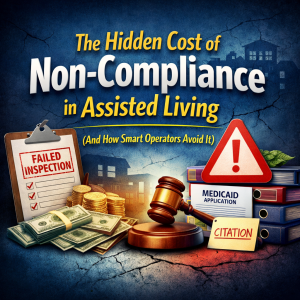
The Hidden Cost of Non-Compliance in Assisted Living (And How Smart Operators Avoid It)
Running an assisted living facility isn’t just about providing quality care — it’s about staying consistently compliant in a highly regulated environment.
And here’s the truth most operators learn the hard way:
👉 Non-compliance doesn’t just lead to citations — it silently drains your time, money, and reputation.
If you’re an owner, administrator, or planning to open your own facility, this blog will help you understand:
- The real cost of non-compliance
- Where most facilities go wrong
- And how to stay inspection-ready without stress
⚠️ What Non-Compliance Really Costs You
Most people think compliance issues only matter during inspections.
That’s a mistake.
In reality, the cost shows up in multiple ways:
1. Financial Losses
- Fines and penalties
- Delayed Medicaid reimbursements
- Lost revenue due to denied applications
Even small documentation errors can impact your entire cash flow.
👉 Facilities that don’t properly manage Medicaid billing and applications often face delays and revenue gaps — something avoidable with the right systems in place.
2. Failed Inspections & Repeat Surveys
A single deficiency can trigger:
- Follow-up inspections
- Corrective action plans
- Increased scrutiny from regulators
And the worst part?
Many of these issues are 100% preventable with regular mock surveys and audits.
3. Staff Burnout & Confusion
When policies are unclear or outdated:
- Staff make inconsistent decisions
- Training gaps appear
- Errors increase
This leads to frustration, turnover, and poor resident outcomes.
4. Reputation Damage
Families talk. Referrals matter.
One compliance issue can:
- Reduce trust
- Impact occupancy
- Hurt long-term growth
🔍 Why Most Assisted Living Facilities Struggle with Compliance
It’s not because operators don’t care.
It’s because compliance is complex and constantly changing.
Here’s where most facilities fall behind:
❌ Lack of Updated Policies & Procedures
Outdated manuals = instant red flag during inspections.
❌ Poor Documentation Systems
“If it’s not documented, it didn’t happen.”
❌ No Pre-Survey Preparation
Waiting for the state survey instead of preparing for it.
❌ Weak Staff Training
Your team is your front line — and they need consistent, practical training.
✅ How Smart Operators Stay Ahead
Successful facilities don’t “hope” they pass inspections.
They build systems that make compliance automatic.
✔️ 1. Conduct Regular Mock Surveys
Mock surveys simulate real inspections and uncover issues early.
They help you:
- Identify gaps
- Fix problems proactively
- Walk into inspections with confidence
✔️ 2. Invest in Ongoing Staff Training
Compliance is not a one-time training — it’s ongoing.
Focus on:
- Medication management
- Resident rights
- Infection control
- Documentation standards
Training ensures your team performs correctly even under pressure.
✔️ 3. Build Strong Policies & Systems
Your facility should run on systems, not guesswork.
That includes:
- Clear SOPs
- Updated policy manuals
- Defined workflows
✔️ 4. Simplify Medicaid Processes
Medicaid is one of the biggest pain points for facilities.
From applications to billing, errors can delay payments and hurt operations.
Facilities that streamline Medicaid processes see:
- Faster approvals
- Better cash flow
- Fewer compliance risks
✔️ 5. Get Expert Guidance
Let’s be real — doing everything alone is overwhelming.
That’s why many successful operators work with experienced consultants who:
- Understand state-specific regulations
- Help with licensing, compliance, and growth
- Keep facilities inspection-ready year-round
💡 The Smart Way to Run an Assisted Living Facility
Assisted living is no longer just about care — it’s a regulated business model that requires systems, strategy, and compliance expertise.
The facilities that thrive are the ones that:
- Prepare before problems happen
- Invest in training and systems
- Stay proactive instead of reactive