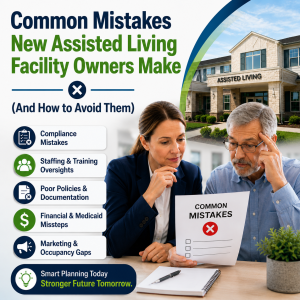
Common Mistakes New Assisted Living Facility Owners Make (And How to Avoid Them)
Starting an assisted living facility is both an exciting business opportunity and a meaningful way to serve your community. However, many new owners underestimate the planning, compliance, and operational responsibilities that come with running a successful facility.
A small mistake during the startup phase can lead to licensing delays, failed inspections, financial losses, or ongoing compliance issues. The good news is that these challenges are preventable with the right strategy and expert guidance.
1. Starting Without Understanding State Regulations
Every state has its own licensing requirements, staffing standards, resident care rules, and documentation expectations. Many first-time owners assume the process is the same everywhere and end up facing unnecessary delays.
Working with experienced assisted living consultants helps you understand state-specific requirements before you invest time and money.
2. Waiting Too Long to Create Policies and Procedures
Policies and procedures are more than paperwork—they establish how your facility operates every day. Missing or outdated policies can create problems during inspections and increase operational risks.
Preparing comprehensive documentation before opening allows your staff to follow consistent processes while maintaining quality resident care.
3. Underestimating Staff Training
Even the best facility cannot succeed without knowledgeable staff members. Regular education helps employees understand resident rights, emergency procedures, medication assistance, infection control, and daily operational responsibilities.
For administrators and future operators looking to meet licensing requirements, professional online education is available through ALF Core Training Florida:
Investing in training improves compliance, boosts staff confidence, and creates a better experience for residents.
4. Ignoring Compliance Until an Inspection Is Scheduled
Many facilities only review their documentation when they know an inspection is approaching. This reactive approach often results in citations that could have been avoided.
Instead, facilities should conduct routine internal audits, maintain accurate records, and perform mock surveys throughout the year. A proactive compliance strategy saves time, money, and unnecessary stress.
5. Forgetting About Medicaid Planning
Medicaid applications, billing, and reimbursement processes can become overwhelming without proper systems in place. Delays in documentation or submission may affect cash flow and resident services.
Planning your Medicaid process from the beginning creates smoother operations and supports long-term financial stability.
6. Neglecting Marketing and Occupancy Growth
Opening the doors is only the beginning. Many owners spend months preparing their facility but have no strategy for attracting residents.
A successful assisted living facility should focus on:
- Building a professional online presence
- Developing referral relationships
- Creating educational content
- Maintaining positive community engagement
- Collecting and showcasing testimonials
Consistent marketing helps maintain occupancy and supports sustainable growth.
7. Trying to Handle Everything Alone
Licensing, compliance, staff development, Medicaid, operations, and marketing all require specialized knowledge. Attempting to manage every aspect independently often leads to burnout and costly mistakes.
Partnering with experienced consultants allows owners to focus on delivering exceptional resident care while receiving expert support for regulatory and operational challenges.
Additional Resources for Assisted Living Professionals
The assisted living industry continues to evolve, making ongoing education more important than ever. Administrators, owners, and staff can stay informed through trusted industry resources.
Visit ALF Boss for practical articles, regulatory updates, compliance tips, and operational guidance designed specifically for assisted living professionals:
If you’re preparing for administrator requirements or looking for flexible online education, ALF Core Training Florida offers self-paced learning that helps professionals build confidence and stay compliant:
Building a successful assisted living facility requires more than obtaining a license. It demands careful planning, continuous education, regulatory awareness, and a commitment to operational excellence.
By avoiding common startup mistakes and utilizing trusted resources, facility owners can create stronger businesses, provide outstanding resident care, and position themselves for long-term success in an increasingly competitive assisted living industry.