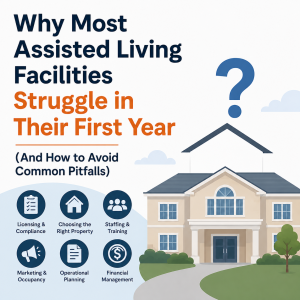
Why Most Assisted Living Facilities Struggle in Their First Year (And How to Avoid Common Pitfalls)
Starting an assisted living facility can be both rewarding and profitable. With the growing demand for senior care services across the United States, many entrepreneurs are exploring opportunities in the assisted living industry. However, while opening an assisted living facility may seem straightforward, many new operators encounter unexpected challenges that can impact compliance, occupancy, and financial stability.
Understanding these common pitfalls before you open your doors can help set your facility up for long-term success.
1. Underestimating Licensing Requirements
One of the biggest mistakes new owners make is assuming the licensing process is simple. Every state has unique regulations governing assisted living facilities, including staffing requirements, building standards, policies, and training obligations.
Missing a single requirement can delay approval, increase costs, and postpone your opening date.
Before investing heavily in renovations or marketing, facility owners should thoroughly understand state-specific licensing regulations and timelines.
2. Choosing the Wrong Property
Not every residential or commercial property can be converted into an assisted living facility.
Zoning restrictions, fire safety requirements, accessibility standards, parking requirements, and occupancy limitations can create major obstacles. Many operators purchase or lease a property only to discover later that costly modifications are necessary.
Conducting a comprehensive feasibility review before committing to a property can save thousands of dollars and months of frustration.
3. Ignoring Operational Planning
Licensing is only the beginning. A successful assisted living facility requires systems for:
- Resident admissions
- Medication management
- Staff scheduling
- Emergency preparedness
- Documentation and record keeping
- Quality assurance programs
Without operational systems in place, facilities often struggle to maintain compliance and provide consistent resident care.
4. Hiring Too Quickly
Many new operators focus on filling positions rapidly instead of hiring the right people.
The quality of your caregiving team directly impacts resident satisfaction, family trust, and regulatory compliance. Staff members should receive proper training, understand facility policies, and share your commitment to resident-centered care.
A smaller, well-trained team is often more effective than a larger team that lacks proper preparation.
5. Waiting Too Long to Build Occupancy
Some owners assume residents will arrive automatically once the facility opens.
In reality, occupancy growth requires a deliberate marketing strategy. Building relationships with hospitals, rehabilitation centers, physicians, case managers, and community organizations can create valuable referral sources.
Facilities that begin marketing before opening often reach profitability faster than those that wait until residents start moving in.
6. Falling Behind on Compliance
Compliance is not a one-time event. Regulations change, policies require updates, and staff training must remain current.
Facilities that treat compliance as an ongoing process are typically better prepared for inspections and surveys. Regular internal audits and mock inspections can help identify potential issues before regulators do.
7. Overlooking Medicaid Opportunities
For many facilities, Medicaid programs can provide important revenue opportunities and help serve a broader resident population.
However, enrollment, billing, and documentation requirements can be complex. Operators who understand Medicaid processes early can position their facilities for stronger financial performance while expanding access to care.
Building a Strong Foundation for Long-Term Success
Opening an assisted living facility involves much more than obtaining a license. Successful operators combine regulatory knowledge, operational planning, staff development, marketing, and ongoing compliance management to create thriving communities.
By planning ahead and seeking expert guidance when needed, facility owners can avoid costly mistakes and focus on what matters most: providing exceptional care for residents while building a sustainable business.
The assisted living industry offers tremendous opportunities for entrepreneurs who are prepared to navigate its complexities. Facilities that invest time in planning, compliance, staffing, and growth strategies are far more likely to achieve long-term success.
Whether you’re exploring your first assisted living facility or expanding an existing operation, understanding these challenges today can help prevent costly setbacks tomorrow.