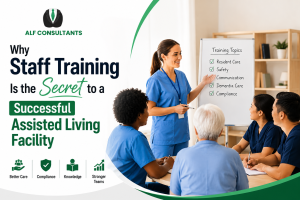
Why Staff Training Is the Secret to a Successful Assisted Living Facility
When families choose an assisted living facility for their loved one, they are not only looking at the building, amenities, or location. They are looking for trust, compassion, safety, and quality care.
And behind every successful assisted living facility is one important factor: a well-trained staff.
No matter how beautiful a facility looks, poor staff training can quickly lead to resident dissatisfaction, compliance issues, high turnover, and negative reviews.
Facilities that invest in staff education and ongoing development often experience stronger operations, happier residents, and better long-term growth.
Here’s why staff training plays such a critical role in assisted living success.
Better Resident Care Starts with Better Training
Residents in assisted living facilities rely on caregivers and staff members for daily support, medication assistance, emotional comfort, and safety.
Without proper training, staff may struggle with:
- Communication
- Emergency response
- Resident rights
- Infection control
- Dementia-related behaviors
- Medication documentation
Proper training helps employees feel confident and prepared in real-life situations.
Residents also feel safer and more comfortable when staff members know how to respond professionally and compassionately.
Strong Training Helps Reduce Staff Turnover
High turnover is one of the biggest challenges many assisted living facilities face today.
Employees who feel unsupported or unprepared are more likely to become overwhelmed and leave quickly.
Replacing staff repeatedly can become expensive and disruptive for both residents and management.
Facilities that provide structured onboarding, mentorship, and continuing education often create stronger, more loyal teams.
When employees feel valued and trained properly, they are more likely to stay long-term.
Compliance Depends on Staff Knowledge
Many survey deficiencies happen because staff members were never properly trained on regulations or facility procedures.
Even small mistakes in documentation or resident care can create serious compliance problems.
Consistent training helps staff understand:
- State regulations
- Resident rights
- Safety procedures
- Documentation standards
- Abuse prevention
- HIPAA requirements
- Emergency preparedness
Ongoing education keeps facilities survey-ready throughout the year instead of scrambling before inspections.
Dementia Training Improves Resident Quality of Life
Many assisted living facilities care for residents living with memory loss or cognitive decline.
Without dementia-specific training, staff may misunderstand resident behaviors, leading to frustration for both caregivers and residents.
Dementia education teaches staff how to:
- Redirect behaviors calmly
- Improve communication
- Reduce agitation
- Support emotional well-being
- Create safe routines
Compassionate dementia care creates a more peaceful environment for everyone in the facility.
Families Notice the Difference
Families pay close attention to how staff members interact with residents.
A caring, knowledgeable team builds trust and reassurance for families during an emotional transition.
Positive staff interactions often lead to:
- Better online reviews
- More referrals
- Higher occupancy rates
- Stronger community reputation
Word-of-mouth remains one of the most powerful marketing tools in assisted living.
Training Creates Leadership Opportunities
Great facilities do not just hire employees — they develop future leaders.
Providing growth opportunities through education and certification programs helps employees build confidence and advance within the organization.
This creates stronger internal leadership and more stable operations over time.
Facilities with strong leadership development programs often experience better team morale and smoother day-to-day management.
Ongoing Education Matters
Training should never be treated as a one-time event.
Healthcare regulations, resident needs, and industry standards continue to evolve.
Successful facilities provide ongoing education through:
- Monthly in-services
- Compliance refreshers
- Emergency drills
- Online training programs
- Skills assessments
- Leadership workshops
Continuous learning helps facilities maintain high standards of care.
In assisted living, staff members are the heart of the facility.
Their knowledge, compassion, and professionalism directly impact resident safety, family trust, compliance, and business success.
Facilities that prioritize staff training are investing in more than education — they are investing in the future of their organization and the well-being of their residents.
Strong teams create strong facilities, and great care always begins with proper training.